
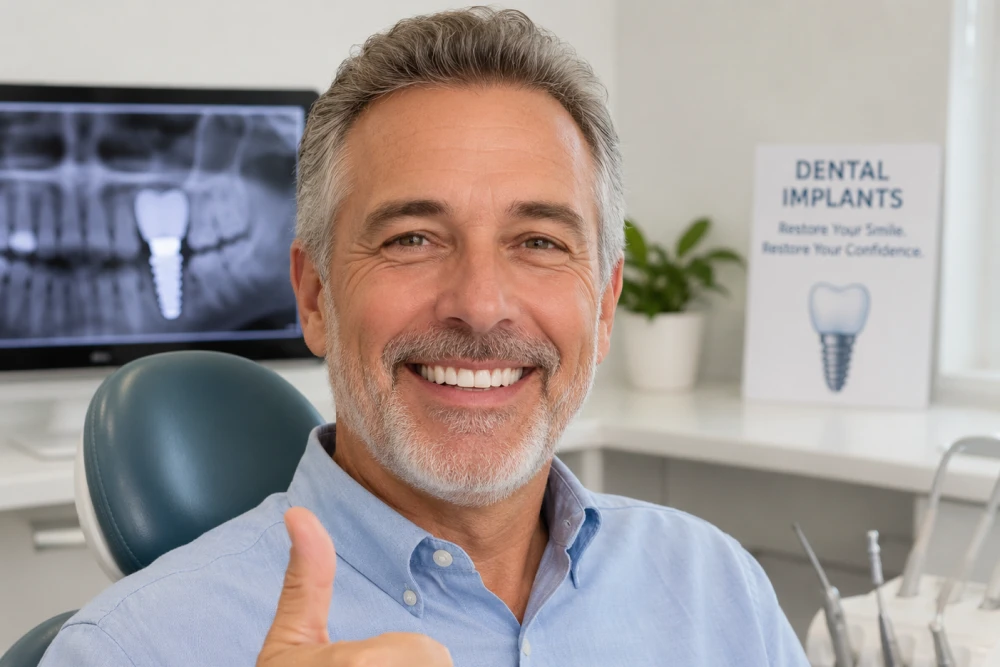
Losing a tooth can affect far more than just your appearance. For example, missing teeth may impact how you eat, speak, and smile. Over time, they can also change how your remaining teeth function. Therefore, while many people first think about the cosmetic side of tooth replacement, dental implants can also support oral health, bite stability, and long-term function.
At Nunyara Dental, we regularly help patients across Greenwood and Perth understand their options when it comes to replacing missing teeth. One of the most effective and long-lasting solutions available today is dental implant treatment.
This guide explains what dental implants are, how they work, who may be suitable for treatment, and what to expect throughout the process.
Table of Contents
- Missing A Tooth And Not Sure What Comes Next?
- What Are Dental Implants?
- How Do Dental Implants Work?
- When Might You Need A Dental Implant?
- Who May Be Suitable For Dental Implants?
- What Happens During Dental Implants Treatment?
- What Can You Expect After Implant Surgery?
- Benefits Of Dental Implants
- Dental Implants Cost In Perth
- Things To Consider Before Getting Dental Implants
- Dental Implants In Greenwood, Perth
- Book A Dental Implants Consultation
- Dental Implants FAQs
Missing A Tooth And Not Sure What Comes Next?
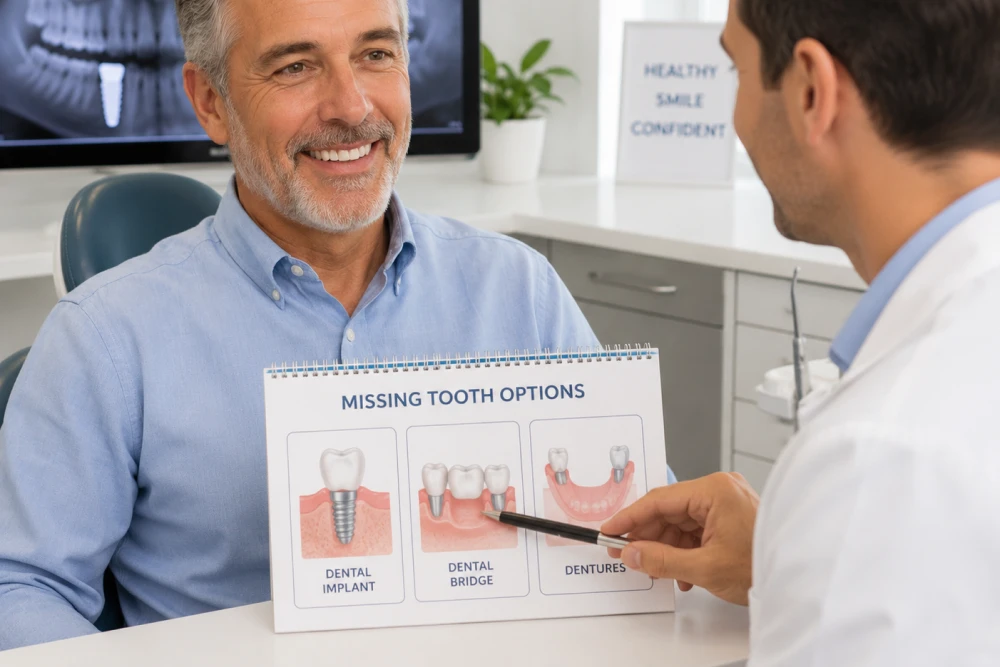
Dentist discussing missing-tooth options with a smiling patient, pointing at a chart showing implant, bridge, and dentures
However, many patients delay replacing a missing tooth because they feel unsure about their options. As a result, they may avoid treatment because it seems too complicated.
Fortunately, modern dentistry offers several predictable, long-term solutions for missing teeth. In many cases, dental implants are considered one of the most natural-feeling and stable options.
Leaving a missing tooth untreated may eventually lead to:
- Movement of surrounding teeth
- Difficulty chewing certain foods
- Bite imbalance
- Bone loss in the jaw
- Changes in facial appearance over time
Replacing missing teeth early can help preserve both oral health and confidence.
If you are exploring cosmetic or restorative treatment options, you may also find our article, “Composite vs. Porcelain Veneers: Which Is Right for Your Smile Makeover?” helpful.
What Are Dental Implants?
Dental implants are artificial tooth roots designed to replace missing teeth. They are typically made from biocompatible titanium and placed into the jawbone, where they integrate with the surrounding bone over time.
Once healed, the implant supports a custom-made dental crown that is designed to look and function like a natural tooth.
A complete dental implant restoration generally consists of three parts:
- The implant post
- The abutment connector
- The dental crown
Unlike removable dentures, dental implants are fixed in place and designed to provide long-term stability.
How Do Dental Implants Work?
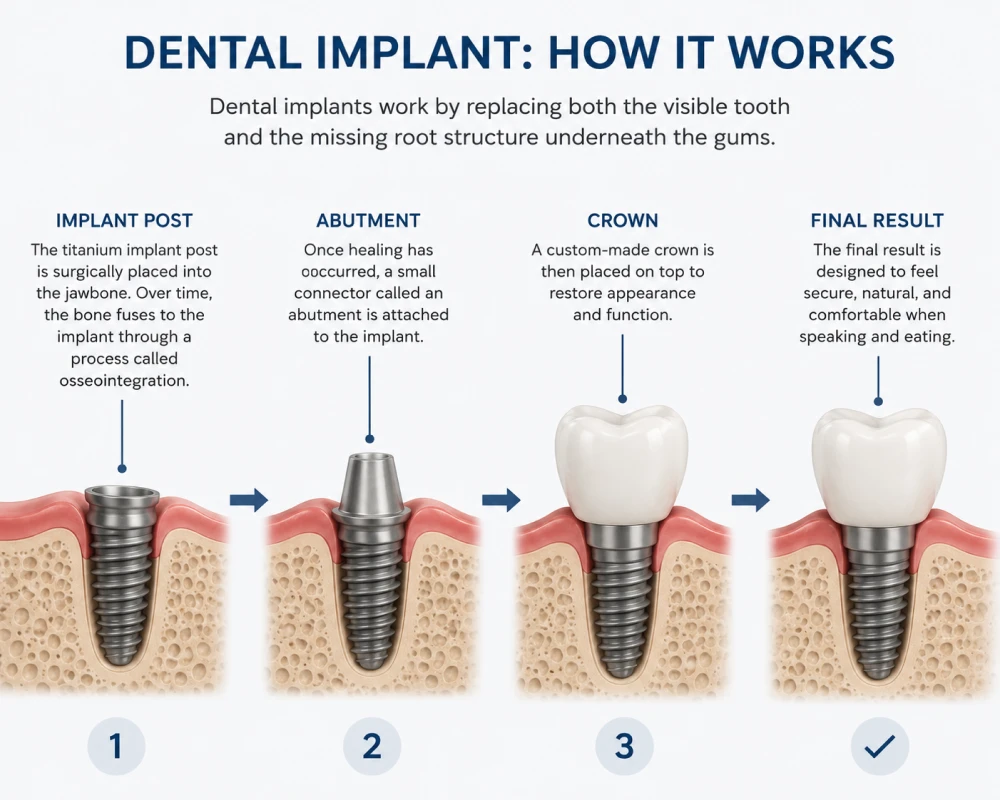
Step-by-step diagram of a dental implant: post insertion, abutment, crown placement, and final tooth restore in the gum.
Dental implants work by replacing both the visible tooth and the missing root structure underneath the gums.
1. Implant Post
The titanium implant post is surgically placed into the jawbone. Over time, the bone fuses to the implant through a process called osseointegration.
2. Abutment
Once healing has occurred, a small connector called an abutment is attached to the implant.
3. Crown
A custom-made crown is then placed on top to restore appearance and function.
The final result is designed to feel secure, natural, and comfortable when speaking and eating.
For patients interested in restoring both function and aesthetics, our blog The Hidden Health Benefits of Straight Teeth (It’s Not Just Cosmetic) also explains how oral structure and alignment influence long-term dental health.
When Might You Need A Dental Implant?
Dental implants may be recommended in a range of situations.
1. Missing A Single Tooth
One implant can replace a single missing tooth without affecting neighbouring teeth.
2. Multiple Missing Teeth
Several implants may support bridges or larger restorations where multiple teeth are missing.
3. Loose Or Uncomfortable Dentures
Implants may help stabilise dentures and improve comfort while eating and speaking.
4. Broken Or Severely Damaged Teeth
In some cases, a tooth that cannot be predictably restored may need to be extracted and replaced with an implant.
5. Long-Term Tooth Loss
When a tooth has been missing for years, bone loss may occur. Implant treatment may still be possible, although additional procedures such as bone grafting may sometimes be required.
Who May Be Suitable For Dental Implants?
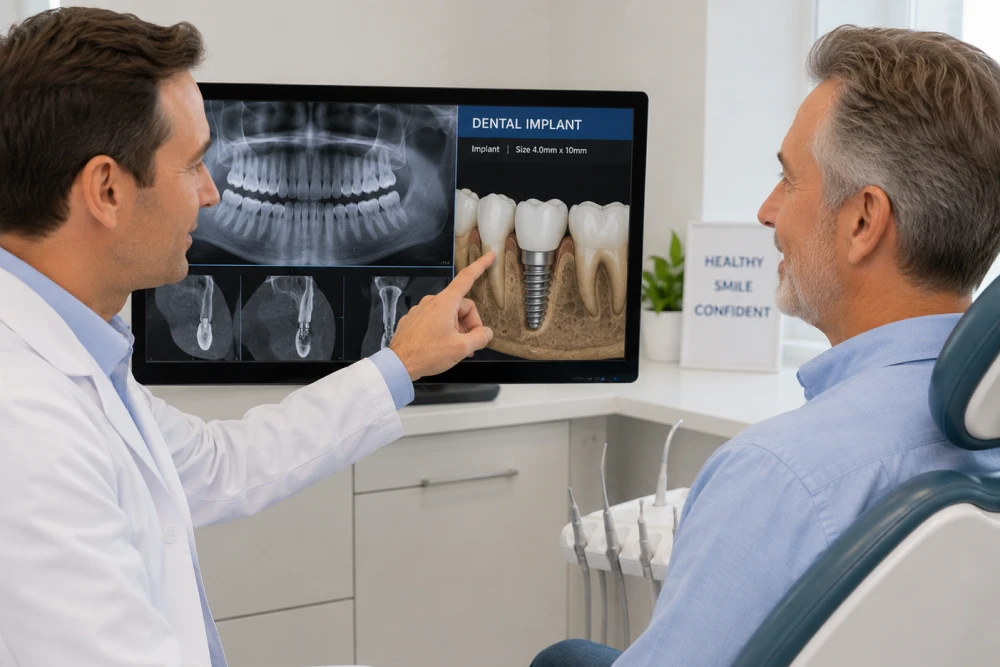
Dentist explains dental implant X-ray and model to patient in a clinic.
Many adults are suitable candidates for dental implants, but several factors influence treatment success.
You may be suitable if you have:
- Healthy gums
- Adequate jawbone support
- Good oral hygiene habits
- Healthy healing ability
- Stable general health
Smoking, uncontrolled diabetes, active gum disease, and certain medical conditions may affect healing and implant success.
At Nunyara Dental, every implant consultation includes a thorough assessment to determine whether treatment is appropriate for your situation.
Maintaining healthy gums before and after treatment is extremely important. You may also wish to read Why Dental Checkups & Scale & Cleaning Are Important to understand better the role preventive care plays in long-term implant success.
What Happens During Dental Implants Treatment?
Dental implants treatment occurs in several stages.
1. Initial Consultation And Planning
The first step involves:
- Dental examination
- X-rays or 3D scans
- Assessment of bone levels
- Discussion of goals and treatment options
Detailed planning is critical for successful implant placement.
2. Implant Placement Surgery
The implant post is surgically inserted into the jawbone under local anaesthetic.
Most patients describe the procedure as more comfortable than expected.
3. Healing Phase
Over the following months, the implant integrates with the surrounding bone.
Healing times vary depending on the patient and the complexity of treatment.
4. Crown Placement
Once healing is complete, a custom-made crown is attached to the implant to restore function and appearance.
The final result is designed to blend naturally with your surrounding teeth.
What Can You Expect After Implant Surgery?

Smiling man relaxing on a beige couch, reading a book titled ‘Maintaining Healthy Habits’ while holding a mug.
Recovery after implant surgery is usually manageable and varies from patient to patient.
It is normal to experience:
- Mild swelling
- Tenderness around the area
- Minor bruising
- Temporary sensitivity
Most patients return to normal activities relatively quickly.
During healing, patients are typically advised to:
- Eat softer foods initially
- Avoid smoking
- Keep the area clean
- Attend follow-up appointments
Following aftercare instructions carefully plays an important role in successful healing.
Benefits Of Dental Implants
Dental implants offer several advantages compared with other tooth replacement options.
1. Stability And Comfort
Because implants are anchored into the jawbone, they feel far more stable than removable dentures. Therefore, they can support better comfort during daily use.
2. Natural Appearance
Modern implant crowns are designed to match natural teeth closely.
3. Bone Preservation
Implants help stimulate the jawbone, reducing the bone loss that often follows tooth loss.
4. Protecting Adjacent Teeth
Unlike traditional bridges, implants do not rely on neighbouring teeth for support.
5. Long-Term Solution
With proper care and maintenance, dental implants may last many years.
Dental Implants Cost In Perth
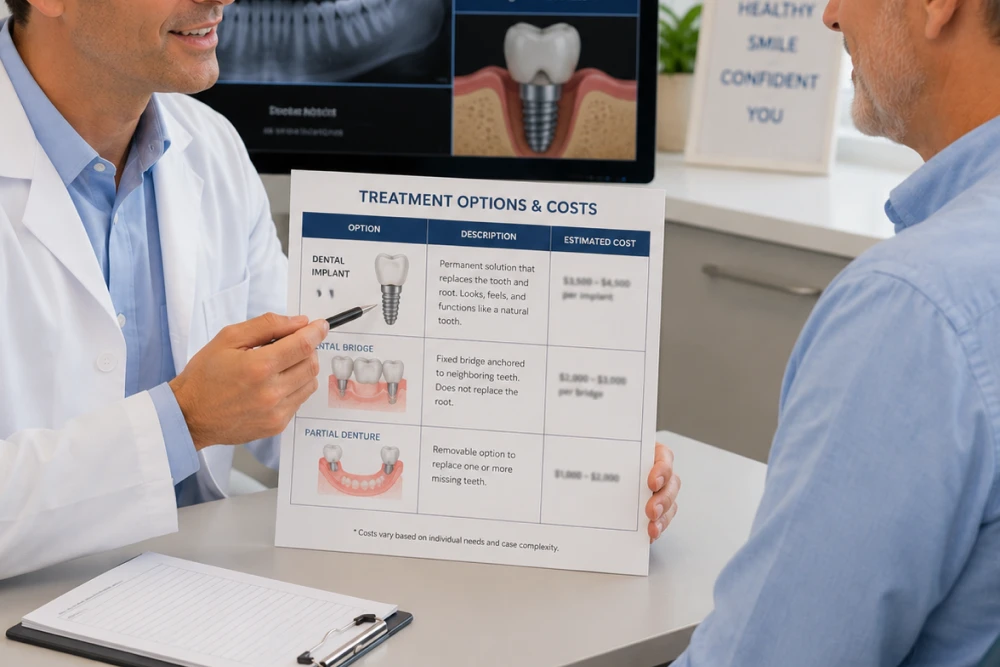
Dentist explains a ‘Treatment Options & Costs’ chart to a patient, showing images of dental implants, bridges, and partial dentures on the board nearby.
One of the most common questions patients ask is:
“How much do dental implants cost in Perth?”
The answer depends on several factors, including:
- Number of implants required
- Complexity of treatment
- Whether bone grafting is needed
- Type of restoration used
- Individual healing considerations
Because every case is different, the best way to understand treatment costs is through a personalised consultation.
At Nunyara Dental, we focus on providing transparent treatment planning and discussing all options clearly before treatment begins.
Things To Consider Before Getting Dental Implants
While dental implants are highly successful, patients must understand the full picture before proceeding.
1. Healing Takes Time
Implant treatment is not instant. Healing and integration require patience.
2. Good Oral Hygiene Is Essential
Implants still require proper brushing, flossing, and professional maintenance.
3. Bone Levels Matter
Some patients may need additional procedures if bone loss has occurred.
4. Not Every Patient Is Suitable
A comprehensive assessment is necessary before treatment.
5. Alternatives Exist
Depending on your situation, alternatives such as bridges or dentures may also be appropriate.
Patients considering broader smile-restoration options may also find the article “Clear Aligners vs Veneers: Which Smile Solution is Right for You?” helpful. useful for understanding other cosmetic and restorative treatments.
Dental Implants In Greenwood, Perth
At Nunyara Dental, we proudly provide dental implant consultations and restorative dentistry services for patients across Greenwood and the wider Perth area.
Our goal is to help patients make informed decisions in a comfortable and supportive environment. Every treatment plan is tailored to the individual, with a strong focus on long-term oral health, function, and aesthetics.
Whether you have recently lost a tooth or have been considering implants for years, our team can guide you step by step. Therefore, you can feel more confident before choosing treatment.
Book A Dental Implants Consultation

A diverse group of healthcare professionals and a patient shake hands in a bright clinic lounge, sharing a warm moment.
If you are considering dental implants in Perth or Greenwood, the first step is a professional consultation.
At Nunyara Dental, we take the time to assess your oral health, clearly explain your options, and answer any questions you may have.
Our focus is on helping patients understand what is possible, what treatment may involve, and what solution best suits their goals and long-term dental health.
Dental Implants FAQs
If you would like to learn more about dental implants in Greenwood or Perth, contact Nunyara Dental today to arrange a consultation and explore your options for restoring your smile.