
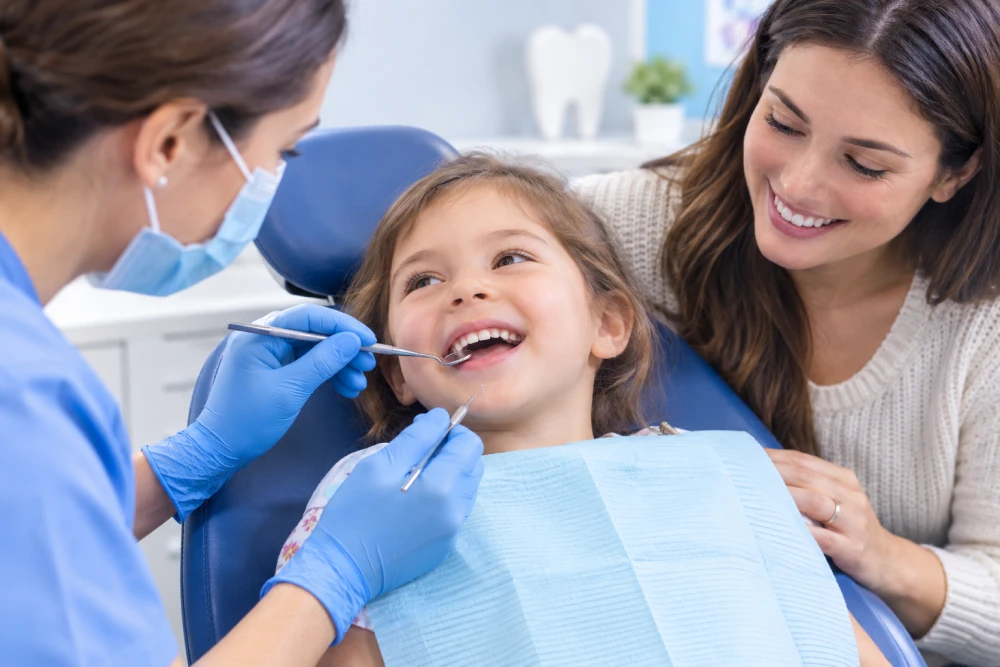
Every parent wants their child to grow up with healthy teeth, but preventing cavities involves more than simply reminding children to brush twice a day.
The habits established during childhood can influence oral health for years to come. Regular children’s dental check-ups, good brushing habits, appropriate fluoride use, a tooth-friendly diet and early identification of dental problems can all contribute to healthier teeth as children grow.
One of the most valuable things parents can do is introduce their child to the dentist early, ideally before there is pain or an obvious dental problem.
At Nunyara Dental in Greenwood, we believe children’s dentistry should focus heavily on prevention. Regular dental visits provide an opportunity to check developing teeth, identify early signs of tooth decay, assess gums and bite development, and help children become comfortable visiting the dentist.
If you are looking for a children’s dentist in Perth or wondering when your child should first see a dentist, this guide explains what parents need to know.
Table of Contents
- Why Children’s Dental Health Starts Earlier Than You Think
- When Should Your Child First Visit the Dentist?
- Why Baby Teeth Are So Important
- What Happens During a Children’s Dental Check-Up?
- How Regular Dental Check-Ups Help Prevent Cavities
- What Causes Cavities in Children?
- How Parents Can Help Prevent Tooth Decay at Home
- The Role of Food and Drinks in Children’s Dental Health
- Fluoride and Children’s Teeth
- What Are Fissure Sealants?
- Helping Children Feel Comfortable at the Dentist
- What Happens as Adult Teeth Begin to Arrive?
- How Often Should Children Visit the Dentist?
- Child Dental Benefits Schedule
- Children’s Dentist in Greenwood, Perth
- Children’s Dental FAQs
- Helping Your Child Build a Healthy Smile for Life
Why Children’s Dental Health Starts Earlier Than You Think
A child’s dental health journey begins as soon as their first teeth start appearing.
Baby teeth can develop tooth decay just like adult teeth. This means waiting until a child complains of toothache before visiting the dentist can allow a relatively small problem to become more difficult to manage.
Early dental care takes a different approach.
Rather than simply treating problems when they occur, preventive children’s dentistry aims to identify risks before they become bigger problems.
Regular dental visits give your dentist an opportunity to monitor:
- Tooth eruption and development
- Early signs of tooth decay
- Gum health
- Plaque build-up
- Brushing effectiveness
- Bite and jaw development
- Diet and snacking habits
- Oral habits that may affect developing teeth
Starting early can also help normalise dental appointments.
A child whose first experience of the dentist is a relaxed check-up may have a very different perception of dentistry from a child whose first appointment happens because they already have significant tooth pain.
When Should Your Child First Visit the Dentist?
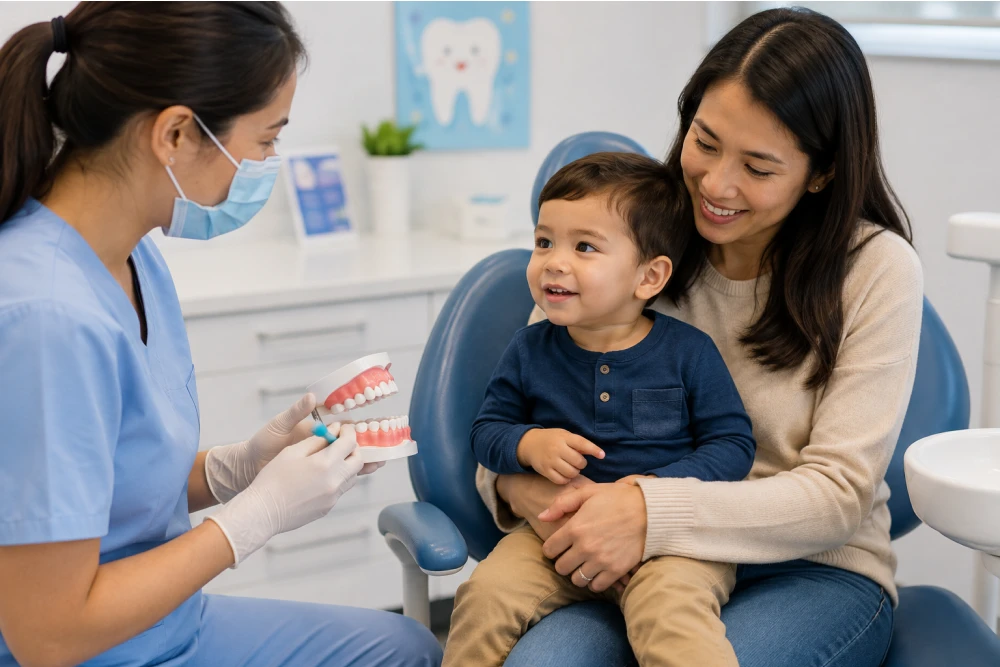
Parents often ask, “What age should my child first see a dentist?”
A useful rule is to arrange an initial dental visit around the time the first teeth emerge or by approximately 12 months of age.
That can sound surprisingly early, but the first appointment is not necessarily about performing dental treatment.
It provides an opportunity to examine your child’s developing mouth and discuss issues such as:
- Teething
- Brushing
- Toothpaste
- Fluoride
- Bottles and feeding
- Thumb or dummy sucking
- Diet
- Tooth development
- What parents should watch for at home
It also gives your child an opportunity to become familiar with the dental environment.
Early appointments can be short and simple. As your child becomes older, they already know what the dental practice looks and feels like, which may make future visits considerably easier.
Why Baby Teeth Are So Important
There is a common misconception that decay in baby teeth does not matter because those teeth will eventually fall out.
Baby teeth, also known as primary teeth, actually have several important jobs.
They help children:
- Bite and chew food
- Develop normal speech
- Maintain space for permanent teeth
- Develop their jaws
- Smile and communicate confidently
Some baby teeth remain in the mouth for many years.
Significant decay can cause pain, infection and difficulty eating. Losing a baby tooth prematurely can also affect the space available for the adult tooth developing underneath.
Looking after baby teeth is therefore an important part of protecting your child’s future adult smile.
What Happens During a Children’s Dental Check-Up?
A children’s dental appointment will vary according to the child’s age, development and individual needs.
Generally, your dentist will examine the teeth and gums and look for signs of decay or other developing issues.
They may assess:
Tooth Development
Are the teeth erupting as expected?
Tooth Decay
Are there early signs of cavities or areas at higher risk of decay?
Gum Health
Are the gums healthy, or are there signs of inflammation or plaque accumulation?
Bite Development
As children grow, their jaws and teeth change considerably. Monitoring development allows potential bite or alignment concerns to be identified.
Oral Hygiene
Your dentist can identify areas your child may be missing when brushing and provide practical advice.
Diet
Frequent sugary snacks and drinks can significantly influence cavity risk. Your dentist may discuss eating and drinking habits with you.
Dental X-rays are not automatically required at every children’s appointment. They may be recommended when clinically appropriate to investigate areas that cannot be adequately assessed through visual examination alone.
Regular examinations are an important part of preventive dental care for adults too. You can learn more in Why Dental Checkups & Scale & Cleaning Are Important.
How Regular Dental Check-Ups Help Prevent Cavities
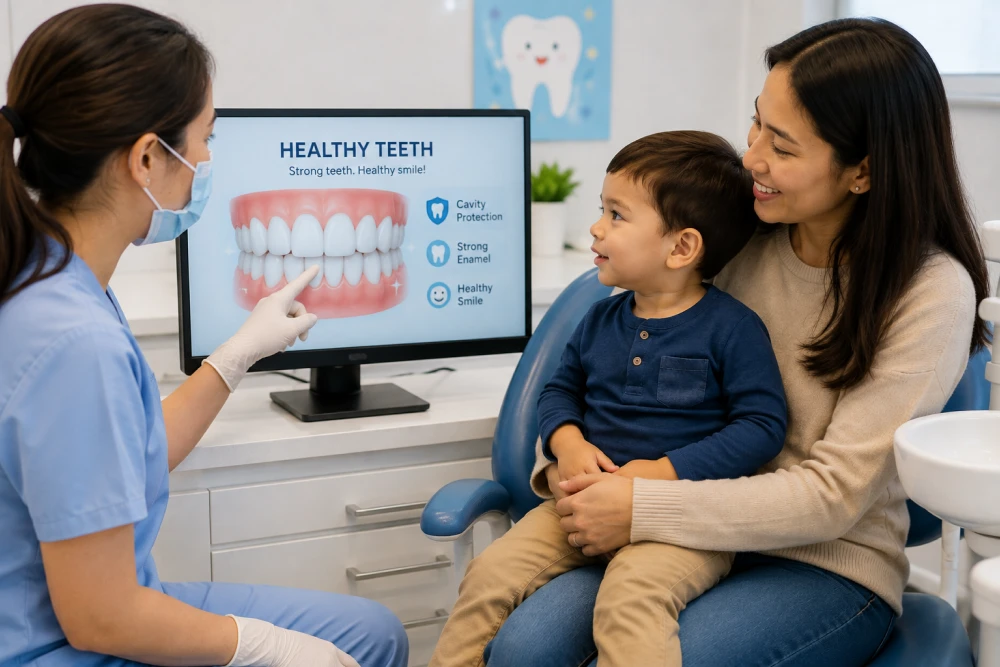
One of the biggest advantages of regular kids dental check-ups is the opportunity to identify problems early.
Dental decay does not usually begin with severe pain.
The process can start gradually as acids produced by plaque bacteria attack minerals in the tooth’s enamel.
By the time a child develops significant toothache, the problem may be considerably more advanced.
Regular examinations allow your dentist to look for early warning signs and assess your child’s individual risk factors.
Preventive recommendations can then be tailored to the child rather than waiting for a cavity to develop.
This may include changes to brushing, fluoride exposure, diet, professional preventive treatment or simply closer monitoring.
What Causes Cavities in Children?
Cavities develop through an interaction between teeth, plaque bacteria, dietary sugars and time.
Bacteria within dental plaque use sugars from foods and drinks and produce acids. Repeated acid exposure can gradually weaken tooth enamel.
Eventually, a cavity can develop.
Several factors may increase a child’s risk.
Frequent Sugary Snacks
It is not simply the amount of sugar consumed that matters. How frequently teeth are exposed to sugar is also important.
Constant grazing can repeatedly expose teeth to acid attacks throughout the day.
Sugary Drinks
Soft drinks, cordial, juice and other sweetened beverages can increase decay risk, particularly when consumed frequently.
Inadequate Brushing
Plaque left on the teeth provides an environment where cavity-causing bacteria can thrive.
Difficult-To-Clean Teeth
Deep grooves in the back teeth can trap plaque and food.
Insufficient Fluoride Exposure
Fluoride can help strengthen enamel and make teeth more resistant to decay.
Going To Bed With Sugary Drinks
Regularly allowing sweetened drinks to remain around the teeth overnight can significantly increase decay risk.
Understanding these factors helps parents focus on prevention rather than simply trying to eliminate every sweet food from a child’s diet.
How Parents Can Help Prevent Tooth Decay at Home
Preventing cavities is usually about establishing a collection of small habits and following them consistently.
Brush Twice A Day
Children should brush their teeth morning and night using a soft toothbrush appropriate for their age.
Young children generally need parental assistance because they do not yet have the dexterity required to thoroughly clean every tooth.
Make The Night-Time Brush Count
Brushing before bed is particularly important because saliva production decreases during sleep.
After the final brush, ideally only water should be consumed.
Clean Between Teeth
When neighbouring teeth begin touching, cleaning between them becomes increasingly important.
Your dentist can demonstrate an appropriate technique for your child’s age.
Replace Toothbrushes Regularly
Worn toothbrush bristles become less effective at removing plaque.
Make Dental Care Normal
Rather than treating dental visits as something that happens when there is a problem, make them part of your family’s normal health routine.
Nunyara Dental has also created The Little Teeth Toolkit: Fun and Engaging Ways to Teach Kids About Oral Hygiene, with practical ideas for making brushing and dental education more enjoyable for children.
The Role Of Food And Drinks In Children’s Dental Health

Diet plays an important role in preventing cavities in children, but parents do not necessarily need to ban every treat.
Frequency and timing matter.
Try to make water your child’s everyday drink and keep sweet foods primarily around mealtimes rather than allowing frequent sugary snacks throughout the day.
Good everyday options can include foods such as:
- Cheese
- Plain yoghurt
- Vegetables
- Wholegrain foods
- Fresh fruit
- Nuts for age-appropriate children
- Water
Be particularly conscious of foods marketed as healthy that can still contain significant amounts of sugar.
Dried fruit, fruit bars, flavoured yoghurt, juice and some breakfast cereals can all contribute to frequent sugar exposure.
The aim is not to create anxiety around food. It is to understand how eating patterns influence teeth and make sensible everyday choices.
Fluoride And Children’s Teeth
Fluoride has an important role in helping protect teeth against decay.
It can help strengthen tooth enamel and support remineralisation after early acid attacks.
The appropriate toothpaste and amount will depend on your child’s age and individual circumstances. Rather than relying on conflicting information online, parents can discuss their child’s fluoride needs with their dentist.
This is particularly useful if your child:
- Has previously experienced tooth decay
- Is considered at higher risk of cavities
- Has difficulty brushing effectively
- Has specific developmental or medical considerations
Professional fluoride treatments may also be recommended for some children based on their individual cavity risk.
What Are Fissure Sealants?
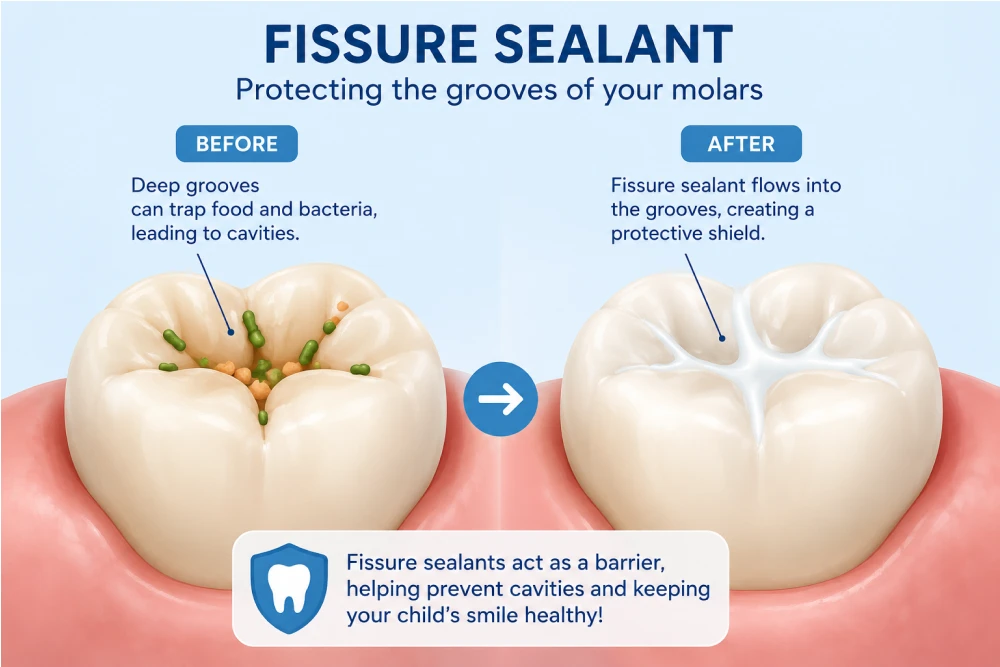
Children’s permanent back teeth often have deep grooves known as pits and fissures.
These grooves can be difficult to clean properly with a toothbrush and may trap food and plaque.
A fissure sealant is a protective material placed over vulnerable grooves to create a smoother surface that is easier to keep clean.
Sealants are not required for every child or every tooth. Your dentist can assess newly erupted permanent molars and determine whether fissure sealing may be beneficial.
This is another reason why dental check-ups remain important even when a child has never experienced a cavity.
Preventive dentistry is about assessing risk before treatment becomes necessary.
Helping Children Feel Comfortable At The Dentist
Dental anxiety can sometimes begin because children associate dentistry with pain or fear.
Early preventive appointments can help change that relationship.
When a child’s first visits are simple examinations rather than emergency treatment, the dental environment becomes familiar.
Parents can also help by keeping language positive.
Instead of saying things such as:
“Don’t worry, it won’t hurt.”
Try:
“The dentist is going to count your teeth and see how well you’re looking after them.”
Avoid sharing your own negative dental experiences immediately before an appointment.
Children are extremely good at picking up on a parent’s anxiety.
The goal is to make dental visits feel like another normal part of staying healthy.
What Happens As Adult Teeth Begin To Arrive?
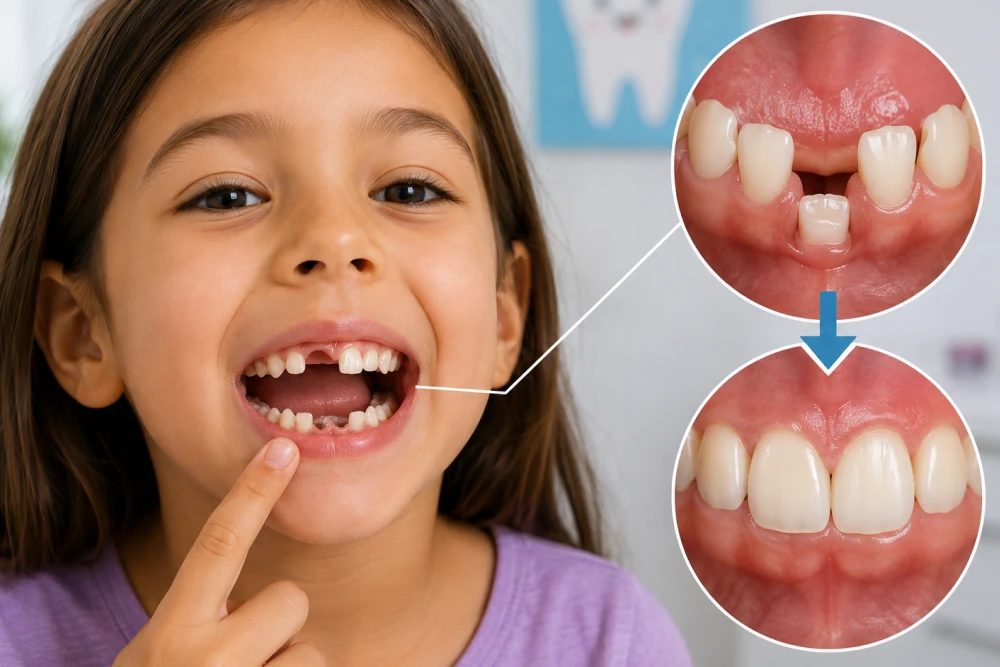
Around school age, children’s mouths enter an important period of transition as permanent teeth begin replacing baby teeth.
The first permanent molars are particularly important because they generally erupt behind the baby teeth rather than replacing an existing tooth.
Parents may not immediately realise these are permanent teeth.
Dental appointments during this stage allow your dentist to monitor:
- Permanent tooth eruption
- Crowding
- Bite development
- Jaw growth
- Cleaning around new molars
- Potential fissure sealant requirements
Alignment also becomes easier to assess as more permanent teeth emerge.
Nunyara Dental’s article The Hidden Health Benefits of Straight Teeth (It’s Not Just Cosmetic) explains why tooth alignment can eventually affect cleaning, bite function and long-term oral health.
How Often Should Children Visit The Dentist?
There is no single dental check-up interval that is perfect for every child.
The appropriate frequency depends on individual factors such as:
- Age
- Previous cavities
- Oral hygiene
- Diet
- Tooth development
- Gum health
- Orthodontic development
- Overall risk of dental disease
Some children may benefit from more frequent monitoring than others.
Your dentist can recommend an appropriate recall schedule based on your child’s individual oral health rather than relying on a one-size-fits-all timetable.
Child Dental Benefits Schedule
Cost can sometimes make parents hesitant about arranging regular dental appointments.
Eligible Australian families may be able to access assistance through the Child Dental Benefits Schedule (CDBS).
The Australian Government program provides eligible children aged 0 to 17 with benefits towards certain basic dental services.
Depending on eligibility and applicable limits, covered services can include:
- Dental check-ups
- X-rays
- Cleaning
- Fissure sealing
- Fillings
- Root canal treatment
- Extractions
Eligibility and benefit amounts can change, so parents should check their child’s current CDBS eligibility and available balance before treatment.
If your family uses private health insurance instead, Nunyara Dental’s Private Health Insurance Rebates and Incentives: What You Need to Know provides further information about understanding dental extras and rebates.
Children’s Dentist In Greenwood, Perth

Finding a dentist your child feels comfortable visiting can make a significant difference to their attitude towards dental care.
At Nunyara Dental in Greenwood, our focus is not simply on fixing cavities. We want children and parents to understand how dental problems develop and what they can do to help prevent them.
For families looking for a children’s dentist in Greenwood or Perth’s northern suburbs, regular preventive visits provide an opportunity to monitor your child’s changing smile from their first teeth through to their permanent teeth.
When a problem does occur, early assessment is important.
Persistent toothache, facial swelling, a broken tooth or dental trauma should not simply be left until the child’s next routine check-up. Nunyara Dental’s What To Do If You Have A Dental Emergency provides more information about recognising situations that may require prompt dental attention.
Children’s Dental FAQs
1. What age should a child first visit the dentist?
A first dental visit is generally recommended when the first teeth begin appearing or by around the child’s first birthday. Early visits allow your dentist to assess development and provide parents with preventive advice before problems arise.
2. How often should children have a dental check-up?
The ideal frequency depends on the individual child. Their dentist will consider factors including age, previous tooth decay, oral hygiene, diet and dental development before recommending an appropriate recall schedule.
3. How can I prevent cavities in my child’s teeth?
The fundamentals include twice-daily brushing, appropriate fluoride use, cleaning between teeth when required, limiting frequent sugary foods and drinks, drinking water regularly and attending preventive dental check-ups.
4. Are baby teeth worth treating if they eventually fall out?
Yes. Baby teeth are important for eating, speech, jaw development and maintaining space for permanent teeth. Decay can also cause pain and infection, so problems with baby teeth should not simply be ignored.
5. Does my child need fissure sealants?
Not necessarily. Fissure sealants can be useful for protecting deep grooves in teeth that are considered at higher risk of decay. Your dentist can assess whether they are appropriate for your child’s permanent molars.
6. What is the Child Dental Benefits Schedule?
The Child Dental Benefits Schedule is an Australian Government program that contributes towards certain basic dental services for eligible children aged 0 to 17. Parents should check their child’s current eligibility and available benefit before treatment.
Helping Your Child Build A Healthy Smile For Life
Healthy adult smiles often begin with good habits established years earlier.
Starting children’s dental check-ups early allows parents and dentists to work together to monitor developing teeth, identify potential problems and teach children how to look after their mouths before poor habits become established.
It also changes what visiting the dentist means.
Instead of the dentist being somewhere children only visit when something hurts, regular preventive appointments can become a normal part of growing up and looking after their health.
At Nunyara Dental in Greenwood, we welcome families from across Perth’s northern suburbs and aim to make children’s dental visits relaxed, educational and positive.
If your child is due for their first dental visit, has not had a check-up recently, or you have questions about their developing teeth, contact Nunyara Dental to arrange an appointment.
A healthy smile does not begin when the adult teeth arrive. It starts with the very first tooth.